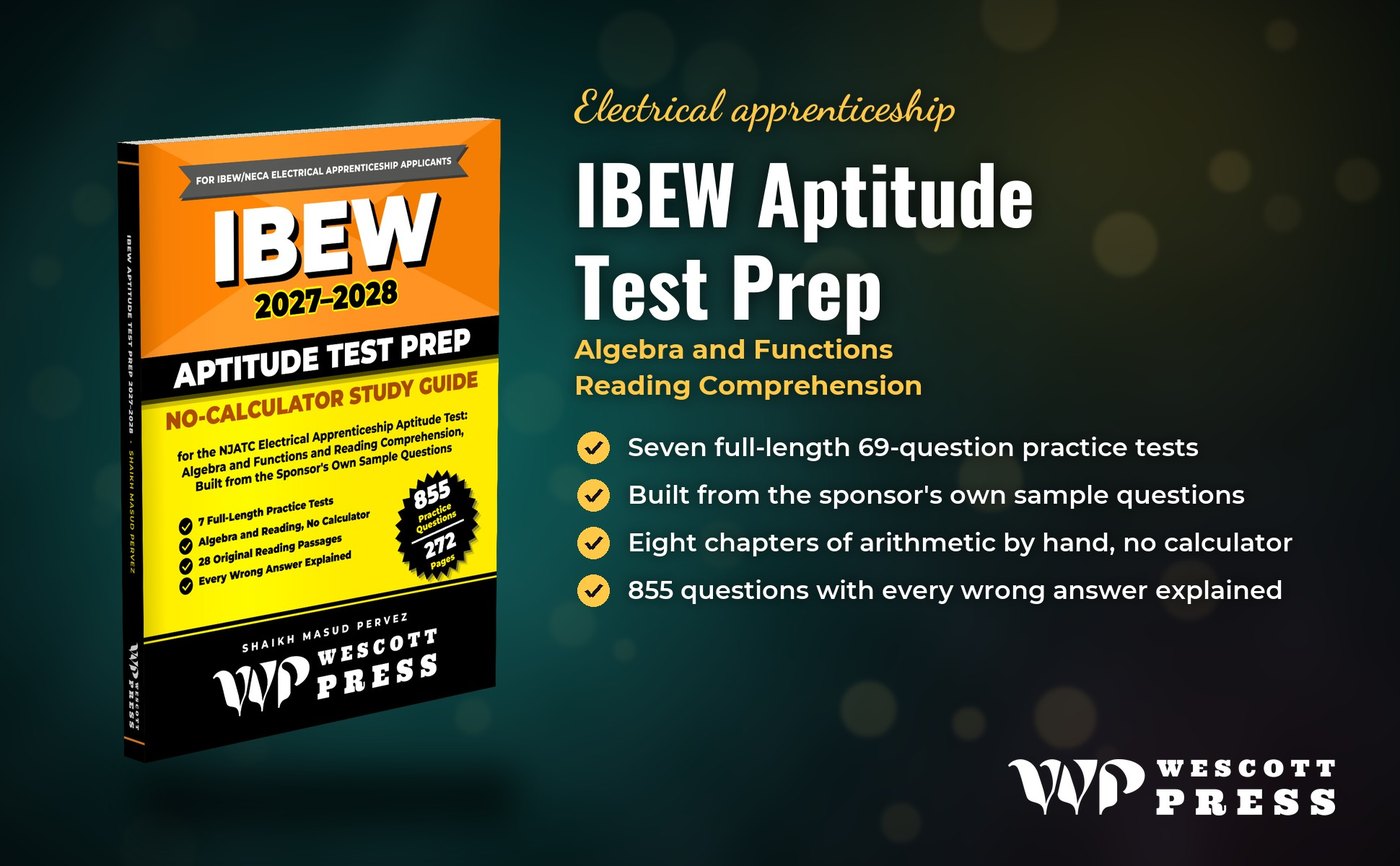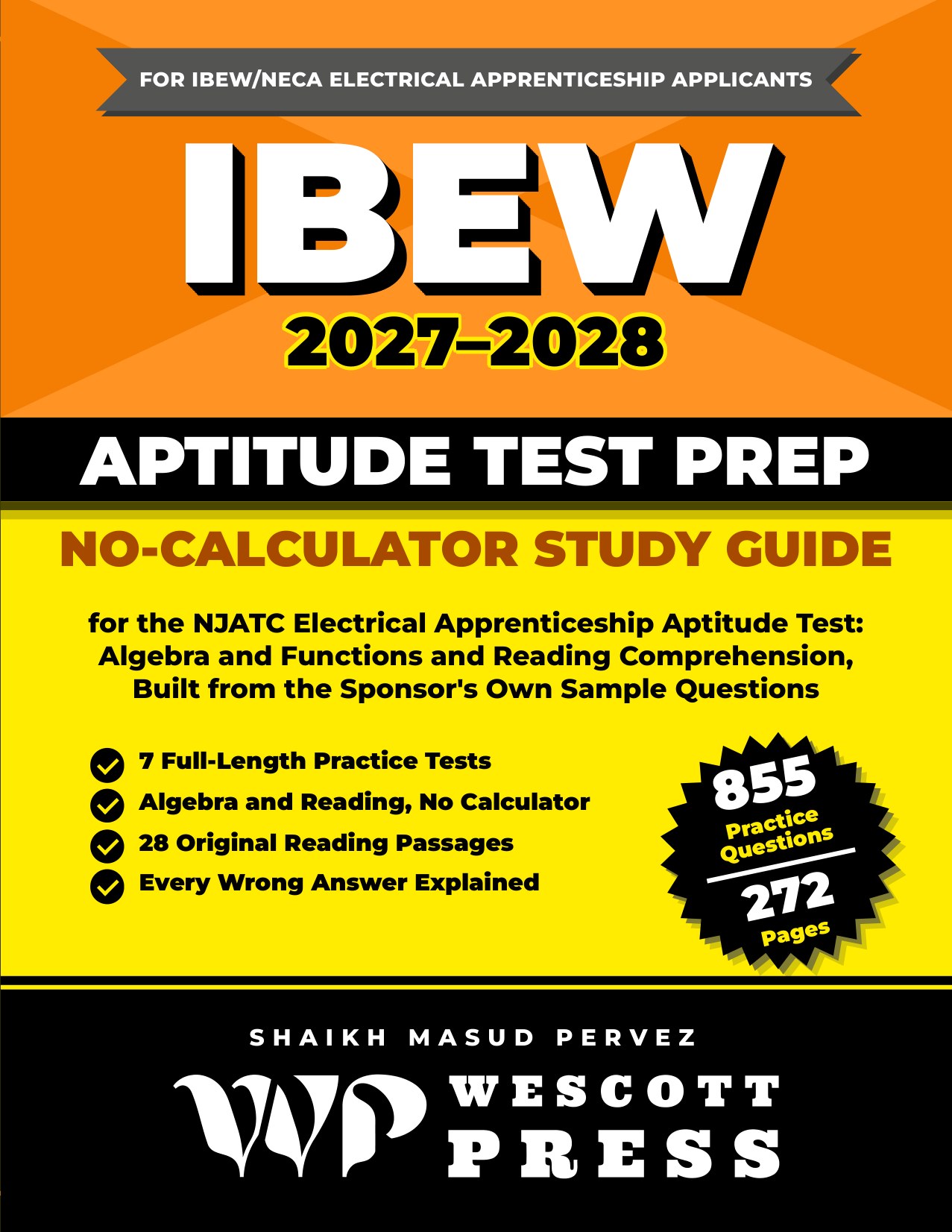
IBEW Aptitude Test Prep 2027-2028
No-Calculator Study Guide for the NJATC Electrical Apprenticeship Aptitude Test: Algebra and Functions and Reading Comprehension, Built from the Sponsor's Own Sample Questions
What is inside
- 855 practice questions in the sponsor's two formats, every wrong answer explained by the slip that produces it
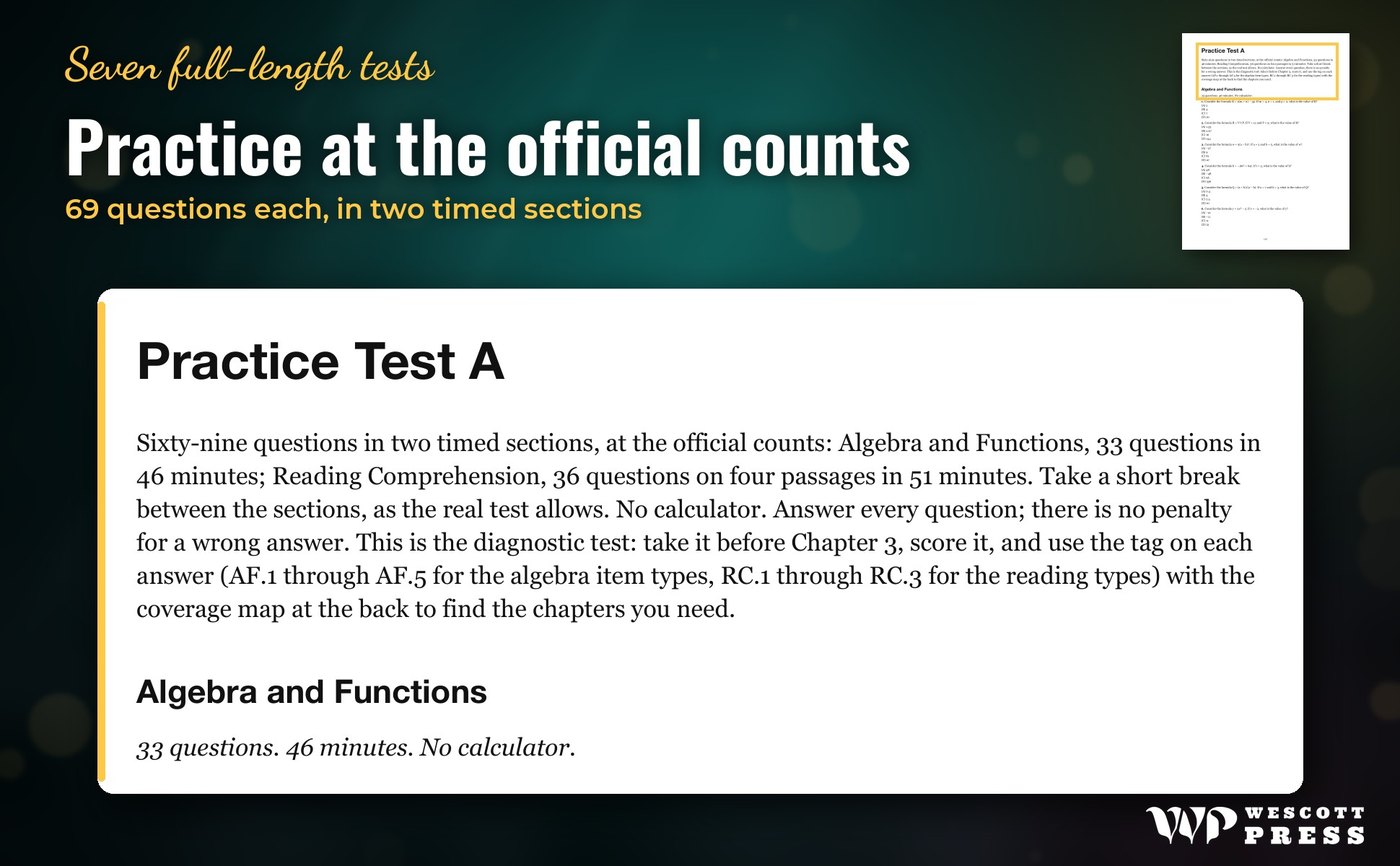
- Seven full-length 69-question practice tests at the official counts and time limits, with 28 original reading passages
- Algebra and Functions item types taught one per chapter: formulas, equivalent expressions, patterns, sign reasoning, and representations
- Reading Comprehension item types: stated detail, inference, and which statement the passage supports
- Eight chapters of arithmetic by hand for a no-calculator test
- The application process as committees publish it: the 1-to-9 report, the qualifying score, the 90-day retake rule, the interview, and the eligibility list
- Test-day plan with pacing checkpoints, formula sheet, coverage map, score tracker, wrong-answer log, and glossary
- Six-week and two-week study plans
The sponsor's aptitude test battery has two tests, no calculator, and no electrical questions. Several guides on this page prepare you for tests that are not there.
The battery used by IBEW/NECA apprenticeship committees is published by the electrical training ALLIANCE (formerly the NJATC), and its applicant pages say exactly what it is: Algebra and Functions, 33 questions in 46 minutes, and Reading Comprehension, 36 questions on four passages in 51 minutes. No calculator. No mechanical reasoning, no spatial section, no electrical theory, and "previous knowledge of electrical work is not required." Look at the other guides here and check what they promise to teach you; anything beyond those two tests is time you will not get back.
Built from the sponsor's own sample questions
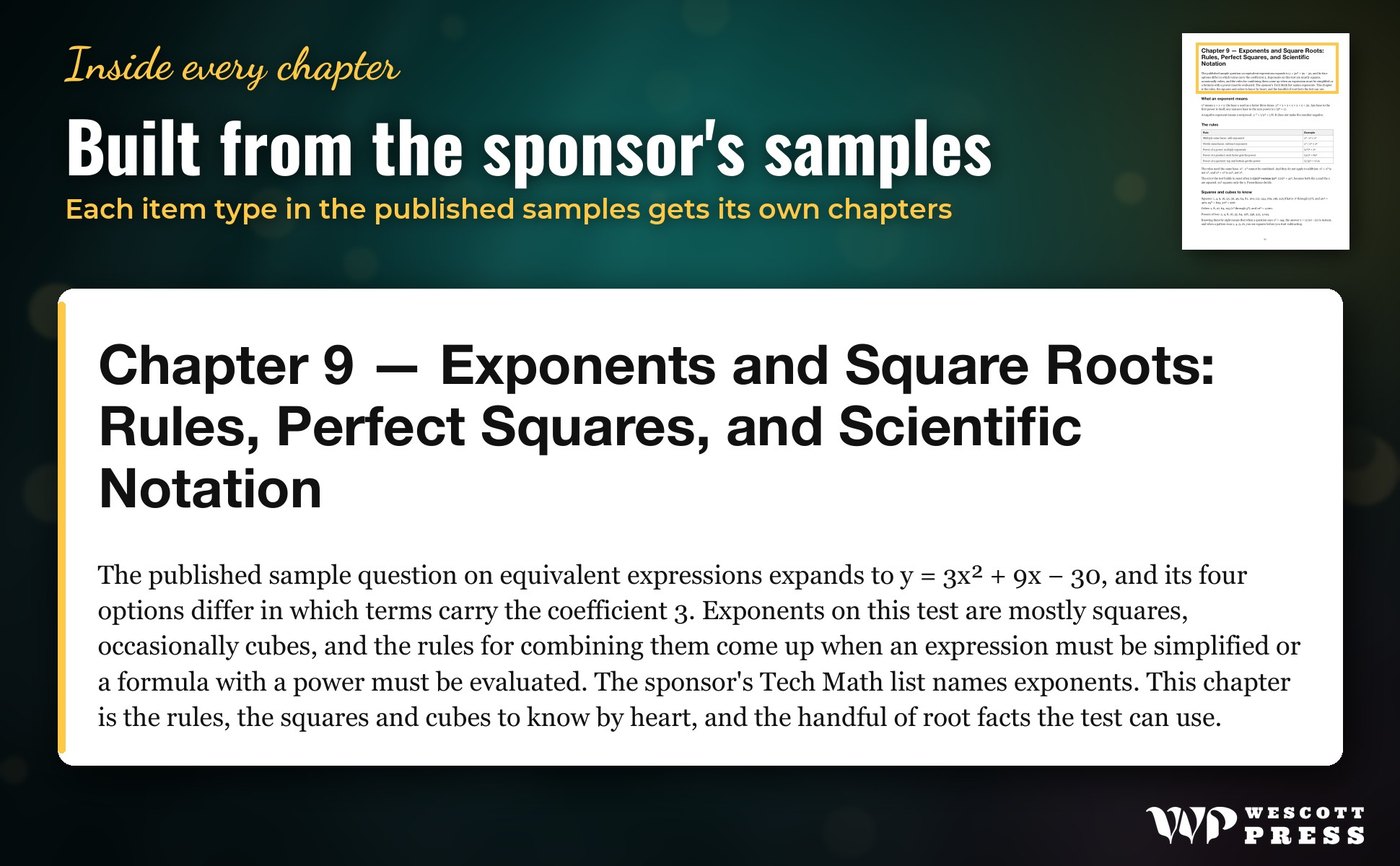
The sponsor publishes five algebra sample questions and three reading sample questions. This book reproduces each one with attribution, takes it apart, and gives every item type its own chapters: substituting into a formula, choosing the equivalent expression, finding the next number in a pattern, reasoning about when a formula is negative, and matching one relationship across a table, an equation, a sentence, and a number line; then stated detail, inference, and which statement the passage supports. Every practice question in the book is written in the sponsor's format.
What is inside
- 33 chapters in four parts: the test and the application process, arithmetic without a calculator, the algebra item types, the reading item types, and test day
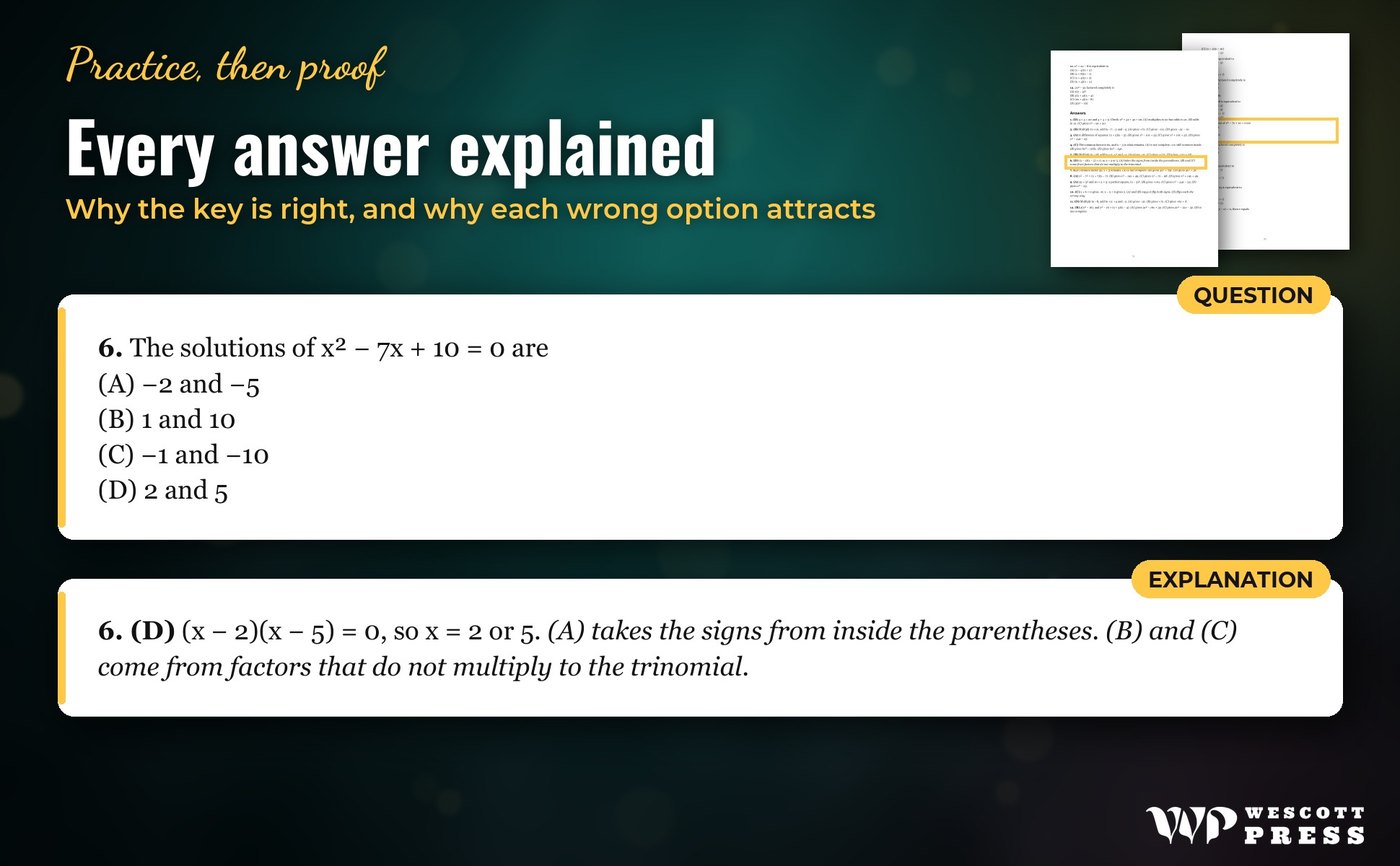
- 855 practice questions, every wrong answer explained by the slip that produces it
- Seven full-length 69-question practice tests at the official counts and time limits, with 28 original reading passages in the test's technical register
- Eight chapters of arithmetic by hand, because this is a no-calculator test and most candidates have not done long division since school
- Scoring and the process as the sponsor and local committees publish them: the 1-to-9 report, the qualifying score, the 90-day retake rule, the interview, the two-year eligibility list, and ten things to confirm with your own committee
- A test-day plan with pacing checkpoints for both sections, the two-pass rule, and the answer-sheet check
- Item-type coverage map, formula sheet, answer key at a glance, score tracker, wrong-answer log, a copyable answer sheet, and a glossary
- Two study plans: six weeks, and two weeks when that is all you have
Why the explanations are different
The sponsor's sample questions show how their wrong answers are made: the coefficient applied to one term and not the others, the wrong half of an alternating pattern, the boundary taken from the formula instead of from its zero. This book's questions use the same recipes, and every explanation names the recipe, so that the last check on any answer is whether the three wrong options are each explained by a slip.
What this book does not do
It does not invent a passing score. The sponsor does not publish one, and this book says so; it reports what named local committees publish and tells you to confirm your own committee's rule. It does not add sections the battery does not have. And it does not make its questions easier than the sponsor's samples.
Not affiliated with or endorsed by the IBEW, NECA, or the electrical training ALLIANCE. IBEW is a trademark of the International Brotherhood of Electrical Workers, which does not sponsor or endorse this product. Question counts, time limits, and rules were read from the sponsor's applicant pages in September 2026; confirm current details with your local committee before you test.