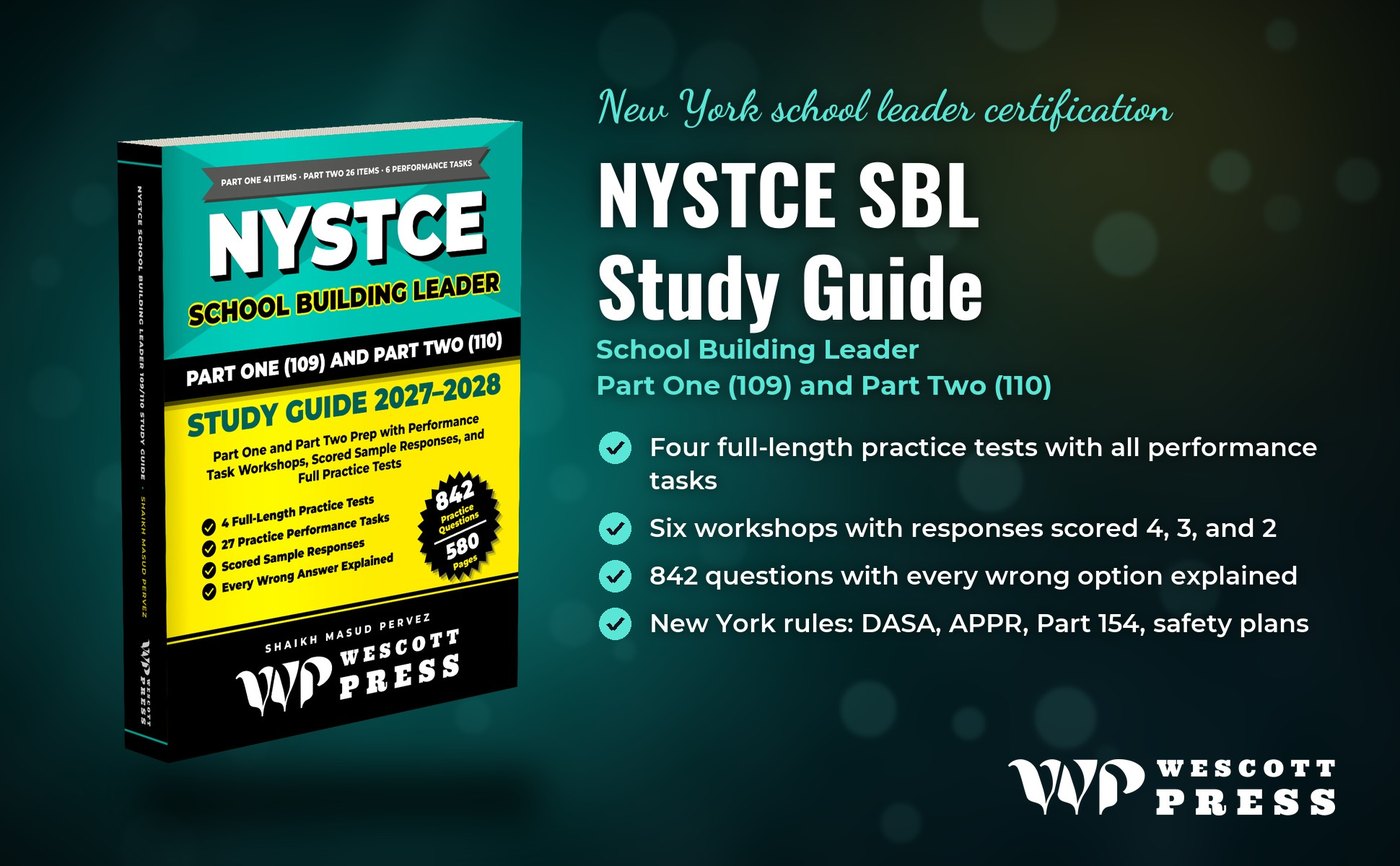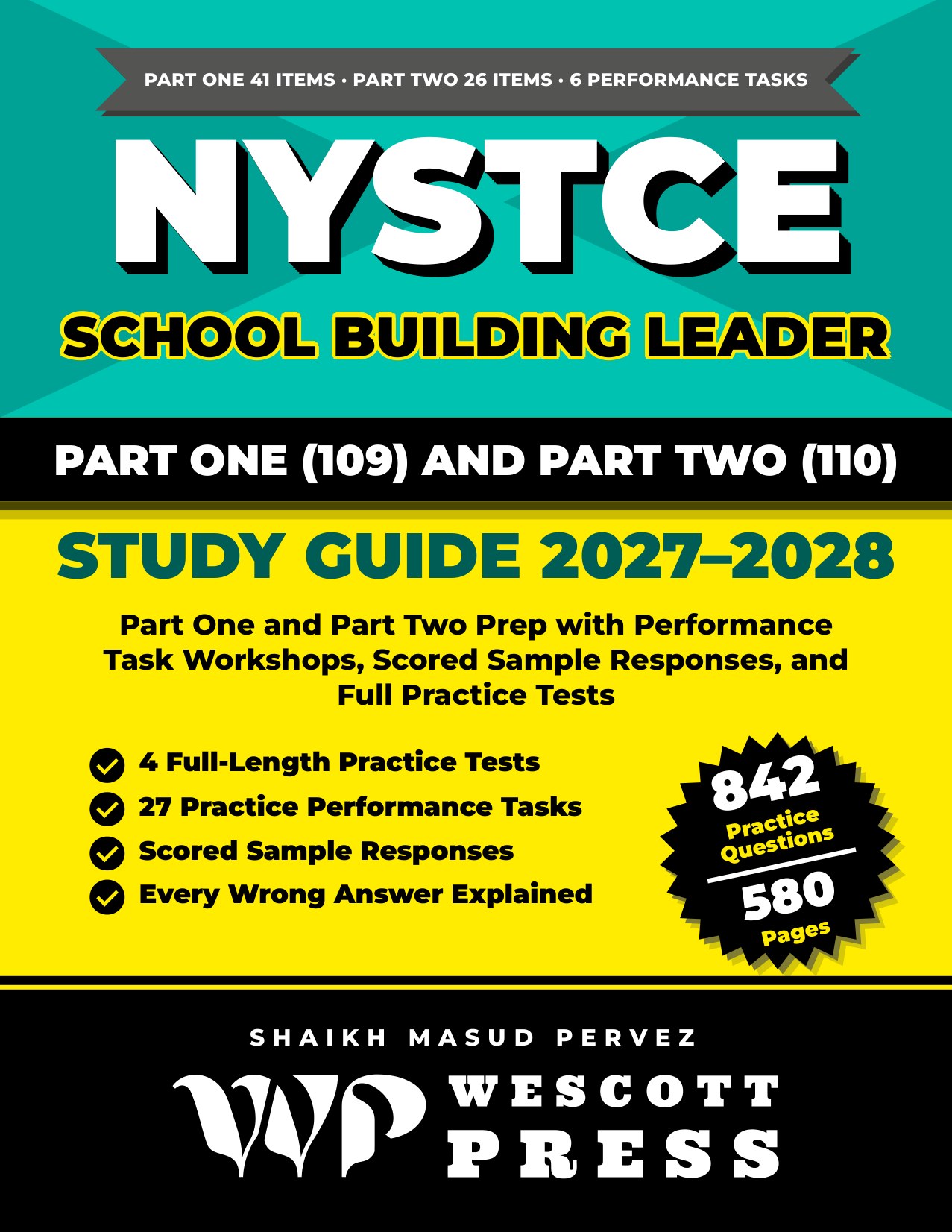
NYSTCE School Building Leader (109/110) Study Guide
Part One and Part Two Prep with Performance Task Workshops, Scored Sample Responses, and Full Practice Tests
What is inside
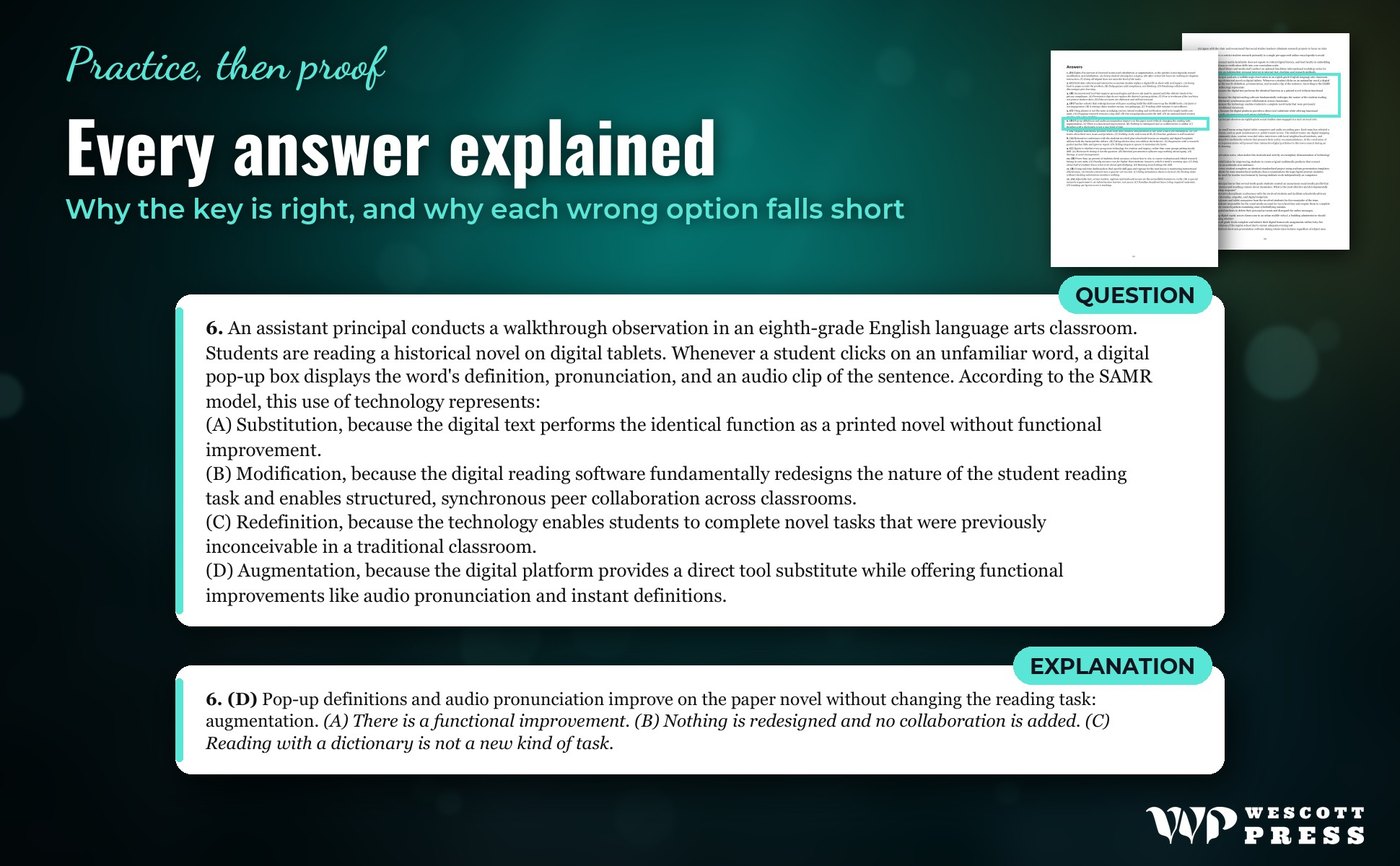
- 842 practice questions, with a reason given for every wrong choice as well as the right one
- Four full-length practice tests, two for each part, each with all three performance tasks and model responses
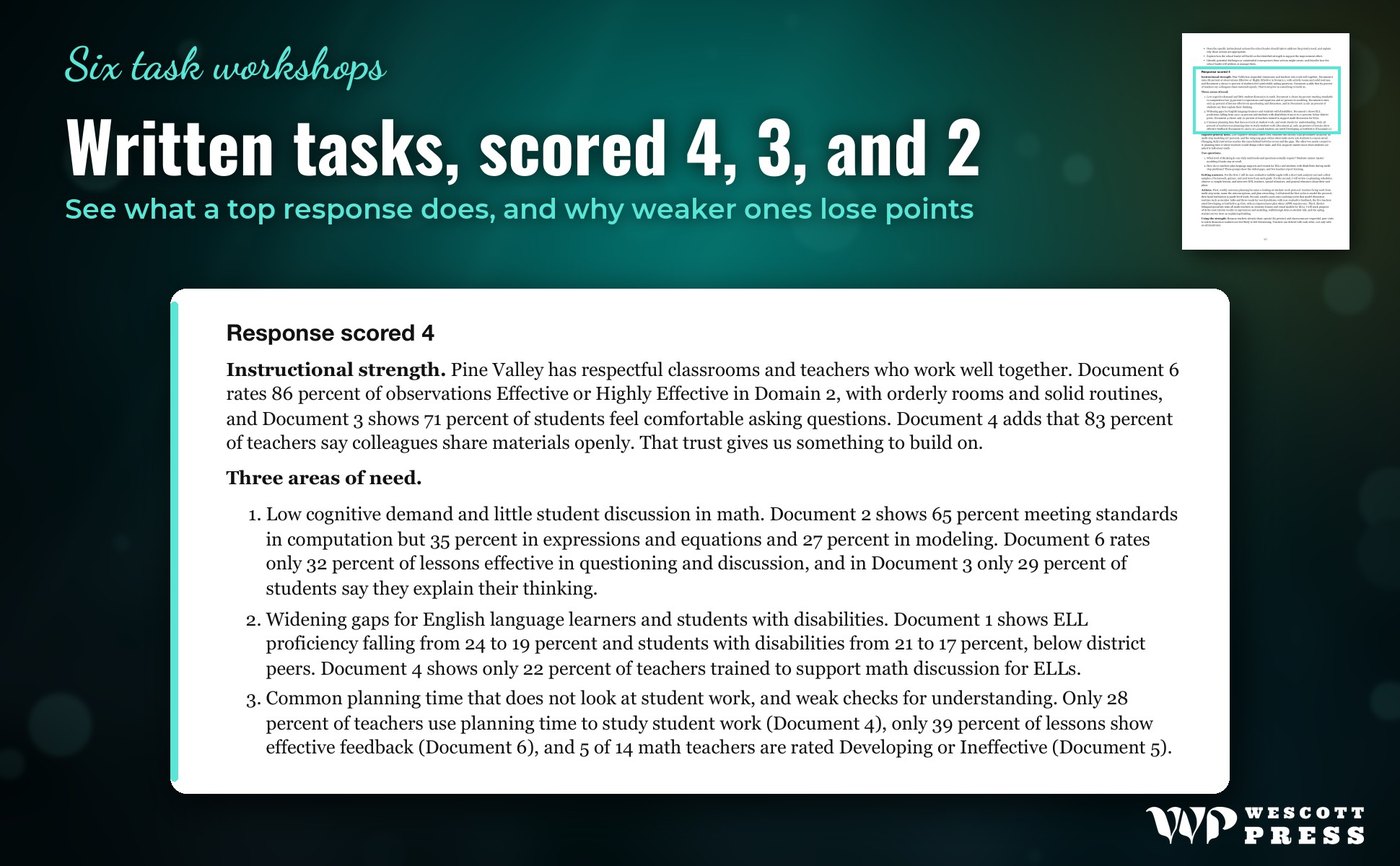
- Six performance task workshops with 15 practice cases, responses scored 4, 3, and 2, and checklists
- A video task rehearsal with lesson transcripts and an observation rubric written for this book
- 59 content chapters on data, curriculum, equity, DASA, APPR, families, budgets, safety plans, FERPA, special education, and school law
- Quick reference, confused terms, glossary, coverage map, answer key at a glance, score tracker, and wrong-answer log
For the 2027–2028 testing year: both parts of the NYSTCE School Building Leader assessment (109/110), with performance task workshops and four full practice tests.
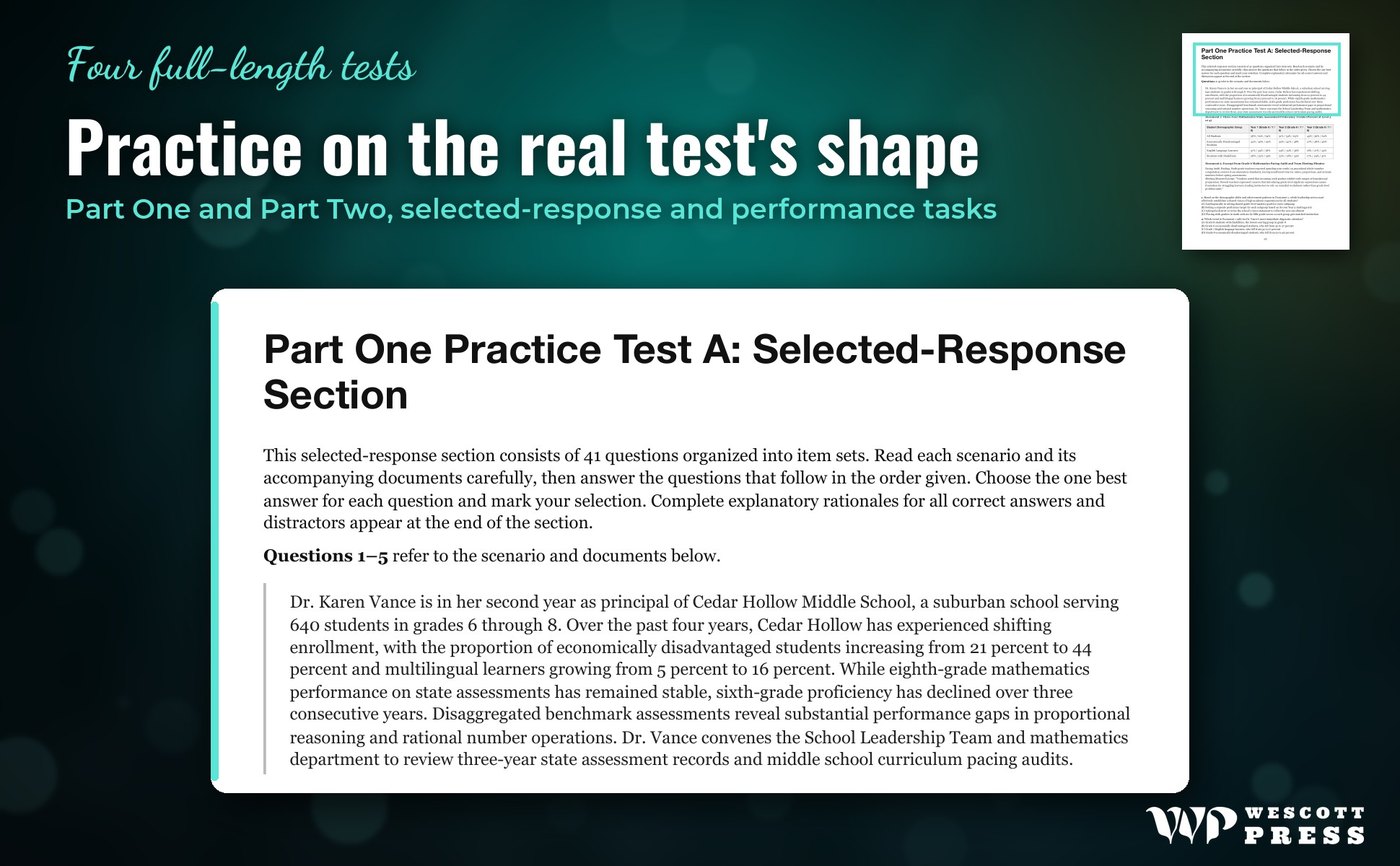
The Revised (May 2019) School Building Leader test is New York's exam for principals and assistant principals, and it comes in two parts of four hours each. Part One (109) has 41 selected-response questions and three written tasks on instructional leadership, equity, and school culture. Part Two (110) has 26 selected-response questions, a video observation of a teacher's lesson, a four-part human capital assignment, and a family and community task. The written tasks carry 60 percent of Part One and 75 percent of Part Two, so this book spends as much time on writing as on the questions.
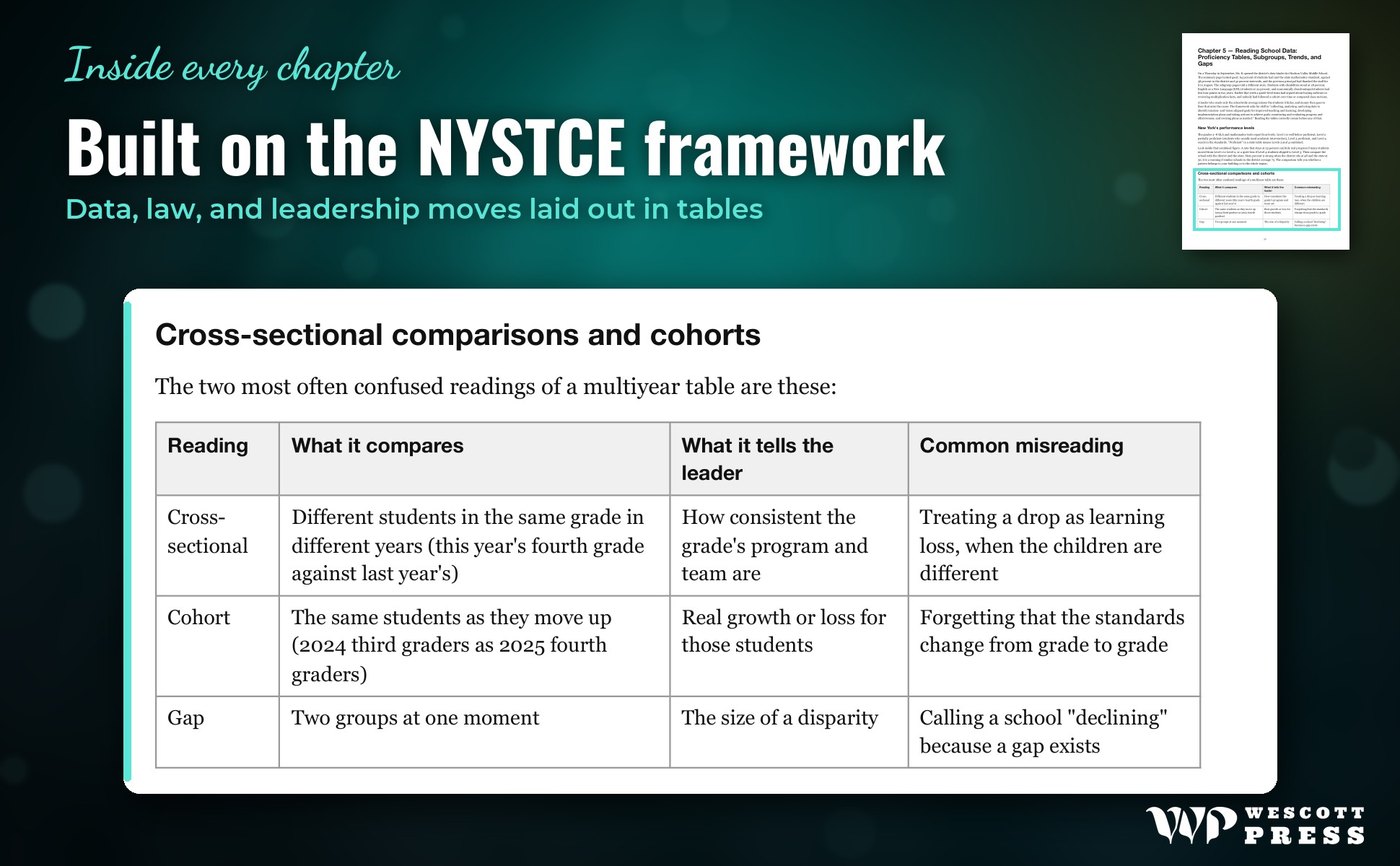
Built on the NYSTCE framework, one indicator at a time. The 59 content chapters follow the five competencies in order, from data, curriculum, and coaching to school culture, DASA, APPR, family partnerships, budgets, safety plans, FERPA, special education, and New York school law. Each chapter shows what a building leader actually does with the idea, names the moves that trip candidates up, and ends with 12 practice questions, the first five built as an item set on documents like the ones on the test.
What is inside
- 842 practice questions, each with the reason the right answer is right and every wrong choice is wrong
- Four full-length practice tests, two for Part One and two for Part Two, each with all three performance tasks, model responses, and checklists
- Six performance task workshops with 15 practice cases and sample responses scored 4, 3, and 2, so you can see what separates them
- A video task rehearsal built on lesson transcripts and an observation rubric written for this book
- New York rules in plain words: the Dignity Act, APPR under sections 3012-d and 3012-e, Part 154 for English language learners, Part 200, school safety plans and drills, the state's bell-to-bell phone law, budgets and the tax cap
- Review tools: a quick reference, commonly confused terms, a glossary, a coverage map, an answer key at a glance, a score tracker, and a wrong-answer log
Checked at the source. Item counts, task formats and weights, timing, the $198 and $197 fees, the 400 to 600 scale, the 520 passing score, the 30-day retake rule, and the 512 and 509 exam waiver scores were read from NYSTCE's test page, assessment framework, and score pages and from NYSED in October 2026. Chapter 2 also explains the new Administrator certificate: SBL initial certificates stop after September 1, 2031, and you must apply and qualify by January 1, 2031.
Not affiliated with or endorsed by the New York State Education Department or Pearson. NYSTCE and New York State Teacher Certification Examinations are trademarks of the New York State Education Department, which does not sponsor or endorse this product.